Office clearance in Hampstead for organised, careful removal
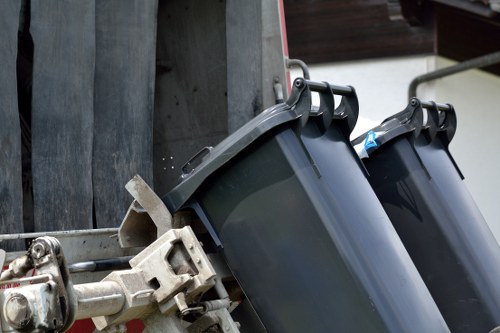
Office clearance in Hampstead needs a tidy, methodical approach that keeps your building usable while unwanted items are removed with minimal disruption. We handle the practical work involved in clearing desks, chairs, filing cabinets, storage units and mixed office contents, with a service shaped around how commercial spaces are actually used. For many customers, the aim is not simply to take things away, but to leave rooms easier to hand over, reconfigure or refresh for the next stage of work.
Our office clearance service is arranged for businesses, landlords, managing agents and organisations that need contents removed from individual rooms or from larger office floors. We can help with general clear-outs, redundant furniture, archived paperwork areas and office items that no longer fit the way the space is used. If you also need to understand pricing before booking, you can review pricing and quotes alongside the scope of work, then decide what to include in your request.
When the job involves a clear plan, the result is usually calmer and faster. We focus on practical removal rather than overcomplicating the process, and that means separating reusable items, breakable materials and mixed waste in a sensible order. If you are preparing a move, refurbishing a suite or dealing with a gradual build-up of surplus items, our work can be adapted to the size and layout of the premises. Tell us what needs to go, and we can quote for the clearance accordingly.
Office furniture removal and workspace declutter
Office furniture often makes up the bulk of a clearance, especially where workstations, meeting rooms and reception areas have been redesigned over time. Desks, pedestal drawers, shelving, cupboards, conference tables and chairs can all be removed as part of one visit, provided access is sensible and the items are ready to be taken away. This is useful when a business wants to reduce clutter without spending time dismantling everything itself.
For larger or heavier items, a careful sequence matters. We can remove bulky pieces first so routes stay clear, then move on to smaller contents and loose office materials. That helps when corridors are narrow, lifts are shared or several departments are being dealt with in one building. If you also have domestic items, our home clearance and flat clearance pages explain the related household services available through the same site.
Useful office clearances are often about making sensible choices, not clearing everything indiscriminately. Some customers want to keep selected furniture in place, while others need an entire suite emptied before contractors arrive. Either way, it helps to identify what should remain, what can be removed and whether any items need to be handled separately because they are fragile, unusually heavy or fixed in position. A clear instruction list makes the work smoother for everyone.
Filing, storage and archived office items

Many offices store more than furniture. Filing cabinets, archive boxes, stationery stock, display items and old equipment can gradually fill cupboards and spare rooms, especially in properties that have changed hands or changed use. A clearance can therefore involve more than visible desks and chairs; it may also include the contents of storage rooms, back offices and areas that have been used as informal dumping points for years.
If you are comparing related services, our business waste removal page covers ongoing commercial waste needs, while waste removal is useful when mixed loads need taking away from premises that are not purely office-based. Those pages can help you decide whether your requirement is a single clearance or a broader arrangement. Where paper records, archived folders or confidential materials are involved, it is wise to separate items that need special handling before the clearance begins.
Access and sorting matter because they affect how quickly a clearance can be completed and how much preparation is needed beforehand. If shelves, cupboards or archive rooms contain mixed contents, deciding in advance what stays and what goes saves time on the day. We can work through individual rooms or staged areas in a planned order, which is often the easiest way to clear a workplace that still has staff passing through it.
Equipment, disposal and recycling choices

Office clearances sometimes include more than standard furnishings. You may also need obsolete printers, monitors, cabinets, small appliances, display stands or other equipment removed from the premises. The practical point is to separate what should be taken away from anything that is to be kept, reused or collected elsewhere. That is especially relevant in offices where old and new equipment is temporarily stored together during a transition period.
Where suitable, items can be directed towards reuse or recycling rather than simple disposal. Our recycling and sustainability page gives an overview of the approach taken to materials that can be recovered or separated. For furniture-specific work, the linked furniture clearance and furniture disposal pages can help if your priority is removing chairs, desks or storage units on their own.
The best outcome usually comes from matching the clearance method to the actual contents. Mixed office loads may contain a little of everything, while other jobs are very focused and involve one category only. If you know which parts of the office are being emptied, you can ask for a quotation that reflects that scope. Clear instructions lead to clearer pricing, because the work can be assessed against the number and type of items rather than a vague description.
Clearance for moves, refurbishments and handovers
Offices are often cleared because the space is changing purpose. A business may be relocating, reducing its footprint, modernising its layout or returning a rented unit to the landlord. In those situations, the clearance has to be planned around the wider programme, not treated as a standalone tidy-up. We can work through rooms in stages, remove surplus contents and leave the property ready for the next contractor, occupier or inspection.
Where tenants are leaving a property, it can help to decide early whether anything fixed or awkward needs attention before the main clearance. Loose items are usually straightforward, but built-in fittings, damaged furniture and leftover stock can take extra time to assess. If you are unsure how much needs to go, a list or room-by-room note is often enough to get started. Contact us once you know the basic scope, and we can discuss the practical details of the job.
In commercial properties, timing matters as much as volume. A smaller office may be able to be cleared in one visit, while a larger floor or multi-room suite may need the work spread across access windows. The important thing is that the clearance fits the building’s routine rather than interrupting it unnecessarily. That is one reason many customers ask for a quotation after they have identified the main areas and item types involved.
About Hampstead

Hampstead is a well-known area in north-west London, part of the London Borough of Camden, and it is closely associated with a village-like centre, Georgian and Victorian streets, and a strong tradition of arts and literary life. Hampstead Heath is one of its defining features: a large expanse of open ground that rises over the surrounding streets and includes ponds, woodland, grassy slopes and long views across London. The Heath has helped shape the area’s identity for generations, giving the district a mix of urban character and broad natural space that is unusual so close to the centre of the city. The neighbourhood also has a compact shopping core around Hampstead High Street and Flask Walk, where independent cafés, shops and older buildings create a distinctive street pattern. Several listed buildings and conservation areas reflect the long history of settlement here, from older parish roots through to later residential expansion. The area is also associated with cultural institutions, galleries, theatres and a strong literary heritage, with the former homes of writers, artists and thinkers adding to its reputation. Public transport links and residential streets connect the central village to surrounding parts of Camden and beyond, while the steeper roads leading up toward the Heath give the district its recognisable topography. In combination, these features make Hampstead one of London’s most characterful urban areas, with a layered history that can be read in its architecture, open spaces and surviving historic streetscape.
House, garage and loft clearances alongside office work

Some commercial customers also need related clearances at home, storage or outbuilding level, especially when items have been held separately from the main workplace. A director’s home office, a small archive stored in a garage or a loft full of spare furniture can all create the same practical questions as a workplace clearance: what stays, what goes and what needs to be carried out carefully. If those jobs are connected, they can often be discussed together so the overall plan is simpler.
For that reason, our garage clearance and loft clearance services are useful references when storage areas are part of the wider job. They are distinct from the office itself, but they may still affect how the clearance is scheduled and what items are available to be moved. If the main requirement is at a property rather than in a workplace, the house clearance page gives a broader household option.
If your project includes several spaces, it is sensible to identify them in the same enquiry rather than describing each one separately later. That lets the quotation reflect the true scope without guesswork, and it avoids confusion where one room contains office items, another holds domestic furniture and a third has general stored goods. One clear description is usually enough to start the conversation and move toward a useful estimate.
What affects the quotation for an office clearance
Quotation factors are usually straightforward, but they should be considered carefully so the price reflects the real work involved. The main influences are the number of items, the size and weight of the furniture, access to the property, whether there are stairs or lifts, and whether the clearance includes mixed contents rather than standard office furniture only. Buildings with limited access may require extra time, even where the item count is not especially high.
It also helps to know whether the space is being cleared in one go or in stages. A staged clearance can be useful when staff are still working in part of the office, or when a landlord wants one area done before another is handed over. If you need to compare a clearance with a smaller removal task, the builders waste clearance page is relevant where renovation debris is also involved, though it is a different service from ordinary office contents removal.
When asking for a quotation, give a short outline of the rooms, the kind of furniture present and anything that may need special handling. You do not need to over-explain; a concise summary is often enough. If photographs are available, they can help, but they are not the only way to describe the work. The goal is simply to make the quotation accurate enough that everyone understands the likely scope before the booking is arranged.
Preparing the office before collection
Preparation does not have to be complicated, but it should be practical. If there are items that must remain in the office, it helps to mark them clearly or place them away from the main clearance area. Removing personal belongings, locking away confidential material and separating anything that should not be touched all make the process easier. Where shared premises are involved, advance notice to building management can also prevent avoidable delays.
Another sensible step is to make access as straightforward as possible. That might mean reserving lift use, identifying the best entrance or confirming whether loading arrangements are limited at certain times of day. A clearance team can work more efficiently when there is a simple route through the property and the items to be removed are visible. If you are still deciding what should be included, a rough room-by-room list is enough to begin with.
Once the main items are identified, the work is usually more manageable than it first appears. Offices often contain a mixture of furniture, paperwork and miscellaneous objects, so the main decision is not about perfection; it is about clarity. A few minutes spent separating categories before collection often saves much longer on the day and helps the quote match the reality of the job.
Book a clear quotation for your Hampstead office clearance
When you are ready to move forward, the easiest next step is to request a quotation that matches the actual office space and the items inside it. Whether you are dealing with one room, an entire floor or a combined commercial and storage clearance, the aim is to make the process straightforward and proportionate. We can work from a concise description, then adjust the plan around the building, the contents and the access available.
Our service is intended for customers who want office contents removed in a careful, organised way rather than handled as a rushed general tidy-up. If your job includes furniture, archived items, equipment or mixed waste, that can all be covered in the same conversation. Office clearance remains the main starting point, while contact us is the place to send the details when you are ready to ask for a quotation.
Please include the rooms involved, a rough list of the main items and any access notes that might affect the work. That is usually enough to begin, and it keeps the quotation focused on what actually needs to be removed. If you want a tidy, practical service for office clearance in Hampstead, the final step is simple: send the basic details and ask for a quote.